How Do GLP-1 Agonists Work for Weight Loss? A Complete Science-Based Guide
How does a GLP-1 agonist work for weight loss? Learn the science of appetite control, gut hormones, and natural support options in this complete guide.
How does a GLP-1 agonist work for weight loss? A GLP-1 agonist mimics a natural gut hormone called glucagon-like peptide-1, which slows stomach emptying, signals fullness to the brain, and regulates blood sugar — together reducing appetite and calorie intake. The result is steadier hunger control and, over time, body fat reduction supported by both prescription medications and natural appetite control formula approaches.
Key Takeaways
- GLP-1 is a hormone released by the gut after eating that tells the brain you are full and slows digestion.
- GLP-1 agonists are molecules that imitate this hormone, extending its appetite-suppressing effect for hours instead of minutes.
- GIP is a second gut hormone that works alongside GLP-1 to improve how the body handles food energy.
- Prescription injectables and natural support formulas both aim to enhance GLP-1 and GIP activity, but they differ greatly in strength, cost, and oversight.
- Weight loss with GLP-1 pathways depends on sustained appetite reduction plus diet and movement.
What Is a GLP-1 Agonist?
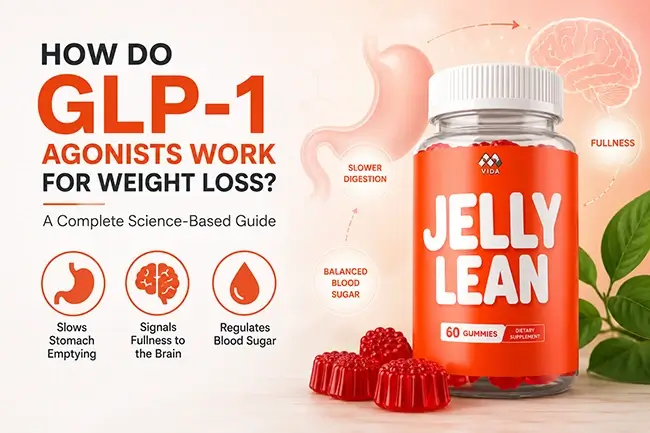
The key takeaway: A GLP-1 agonist is a compound that activates the same receptors as the natural GLP-1 hormone, producing a longer and stronger satiety response.
GLP-1 (glucagon-like peptide-1) is an incretin hormone secreted by L-cells in the small intestine within minutes of eating. Naturally, it breaks down within about two minutes, which limits its effect.
An agonist is simply a substance that binds to and triggers a receptor. A GLP-1 agonist is engineered to resist rapid breakdown, so the satiety signal persists far longer than the body's own version.
According to the National Library of Medicine research on incretin-based therapies, this extended receptor activation is the central reason these molecules influence both blood sugar and body weight.
How Does a GLP-1 Agonist Work for Weight Loss?

In short: A GLP-1 agonist works for weight loss through four overlapping actions — slowing digestion, signaling fullness to the brain, reducing food cravings, and stabilizing blood sugar to prevent hunger spikes.
1. It slows stomach emptying
By delaying how fast food leaves the stomach, the agonist keeps you feeling physically full for longer after a meal. This reduces the urge to snack between meals.
2. It signals satiety to the brain
GLP-1 receptors exist in the hypothalamus, the brain region that governs hunger. Activating them reduces the perception of hunger and the drive to eat.
3. It lowers food reward cravings
Many users report less interest in high-calorie or sugary foods. This dampening of "food noise" is one of the most cited behavioral effects.
4. It regulates blood sugar
GLP-1 prompts insulin release only when glucose is high and suppresses glucagon. Steadier blood sugar means fewer sharp hunger crashes that trigger overeating.
The Role of GIP: GLP-1's Partner Hormone

The key takeaway: GIP (glucose-dependent insulinotropic polypeptide) is a second incretin that complements GLP-1 by improving insulin sensitivity and fat metabolism.
Newer dual-action approaches target both GLP-1 and GIP activity at once. The combination appears to produce stronger metabolic effects than GLP-1 alone.
Research published through the National Institutes of Health highlights how dual incretin signaling can enhance energy regulation. This is why metabolism and fat-burning support formulas increasingly reference both pathways rather than GLP-1 in isolation.
Prescription GLP-1 Agonists vs. Natural Support Formulas
In short: Prescription injectables deliver potent receptor activation under medical supervision, while natural supplement approaches aim to gently support the body's own GLP-1 and GIP activity without injections.
| Factor | Prescription GLP-1 Agonist | Natural Support Formula |
|---|---|---|
| Delivery | Usually injection | Oral / gummy / capsule |
| Mechanism | Directly activates GLP-1 receptors | Supports natural GLP-1 and GIP activity |
| Oversight | Requires a prescription | Available over the counter |
| Strength of effect | Strong, clinically measured | Mild, supportive |
| Typical use | Medical weight management | Everyday appetite and metabolism support |
Pros of Natural Support
- No needles or injections
- Available without a prescription
- Often paired with money-back guarantees
- Lower commitment to start
Cons of Natural Support
- Effects are gentler than prescription drugs
- Results vary between individuals
- Not a substitute for medical treatment of obesity
- Quality differs widely across brands
Our Editorial Perspective on GLP-1 Support Formulas
The key takeaway: In our analysis of the weight-management category, the most useful natural products are transparent about whether they support GLP-1, GIP, or both — and back claims with clear return policies.
We've found that consumers searching for a natural weight loss supplement are often confused by marketing that implies a gummy works identically to an injection. It does not. A supportive formula nudges the body's own incretin response; it does not replace a pharmaceutical agonist.
We recommend treating any supplement without injections as one part of a routine that includes adequate protein, fiber, and movement — the same habits that naturally stimulate GLP-1 release. A gelatin-based appetite control formula such as the one offered by JellyLean as an official wellness store reflects this category trend: combining convenience with a focus on GLP-1 and GIP support and a 60-day money-back guarantee.
This editorial position — that supplements support rather than replicate prescription mechanisms — is the information gap we see missing from most top-ranking articles, which tend to blur the line between the two.
Foods and Habits That Naturally Boost GLP-1
In short: Certain nutrients and behaviors trigger your body to release more of its own GLP-1, reinforcing whatever supplement strategy you choose.
- Protein: Eggs, fish, and legumes are strong GLP-1 stimulators.
- Soluble fiber: Oats, beans, and flaxseed feed gut bacteria that promote GLP-1 release.
- Healthy fats: Avocado and olive oil support incretin response.
- Fermented foods: Yogurt and kefir may influence gut-hormone signaling.
- Regular exercise: Activity improves how sensitive your receptors are to GLP-1.
Guidance from the U.S. Centers for Disease Control and Prevention consistently links protein- and fiber-rich eating with stronger satiety, which aligns with how GLP-1 functions.
Health disclaimer: This guide is for educational purposes only and is not medical advice. GLP-1 agonist medications and weight-loss supplements should be discussed with a qualified healthcare provider, especially if you have a medical condition or take other medications.
Frequently Asked Questions
How long does it take for a GLP-1 agonist to work for weight loss?
Prescription GLP-1 agonists often show appetite changes within days, with meaningful weight loss typically over several weeks to months. Natural support formulas work more gradually and depend heavily on diet and activity, so effects are usually subtle and build over time.
Can you boost GLP-1 naturally without medication?
Yes. Eating protein, soluble fiber, and healthy fats, along with regular exercise, prompts your gut to release more of its own GLP-1. Some people add a natural support supplement designed to encourage GLP-1 and GIP activity as an additional layer.
What is the difference between GLP-1 and GIP?
Both are incretin hormones released after eating. GLP-1 mainly slows digestion and signals fullness, while GIP focuses more on insulin response and fat metabolism — which is why dual-action approaches target both.
Are GLP-1 supplements the same as Ozempic-style injections?
No. Prescription injectables are pharmaceutical-grade GLP-1 agonists that directly and strongly activate receptors. Supplements support the body's natural incretin activity and are far gentler, serving as everyday appetite and metabolism support rather than medical treatment.
Do GLP-1 agonists work without diet changes?
They reduce appetite, which can lower calorie intake on its own, but lasting results are far stronger when paired with balanced nutrition and movement. Diet and exercise also naturally stimulate GLP-1, reinforcing the effect.
Conclusion
The key takeaway: A GLP-1 agonist works for weight loss by extending the body's natural satiety signal — slowing digestion, reducing hunger in the brain, and steadying blood sugar.
Understanding the difference between prescription agonists and natural GLP-1 and GIP activity support helps you set realistic expectations. Both approaches share the same biological target, but they differ in strength, oversight, and how they fit into daily life.
Whichever route you explore, the foundation stays the same: protein, fiber, movement, and consistency amplify any GLP-1 strategy.
If you want to keep exploring how natural metabolism and fat-burning support fits alongside healthy habits, it helps to follow resources that explain the GLP-1 and GIP pathways clearly. JellyLean, as an official wellness store, presents its gelatin-based appetite support formula within this same educational framework — backed by a 60-day money-back guarantee for those researching needle-free options.
Learn More